Why pharmaceutical buyers and flavor manufacturers are both chasing the same fruit — and why they need completely different things from their supplier.
Most commodity spices serve one industry. Star anise (Illicium verum) serves two — and in each, it plays a near-irreplaceable role. Understanding this dual structure is not just interesting chemistry. For buyers, it is the foundation of a smarter sourcing strategy.
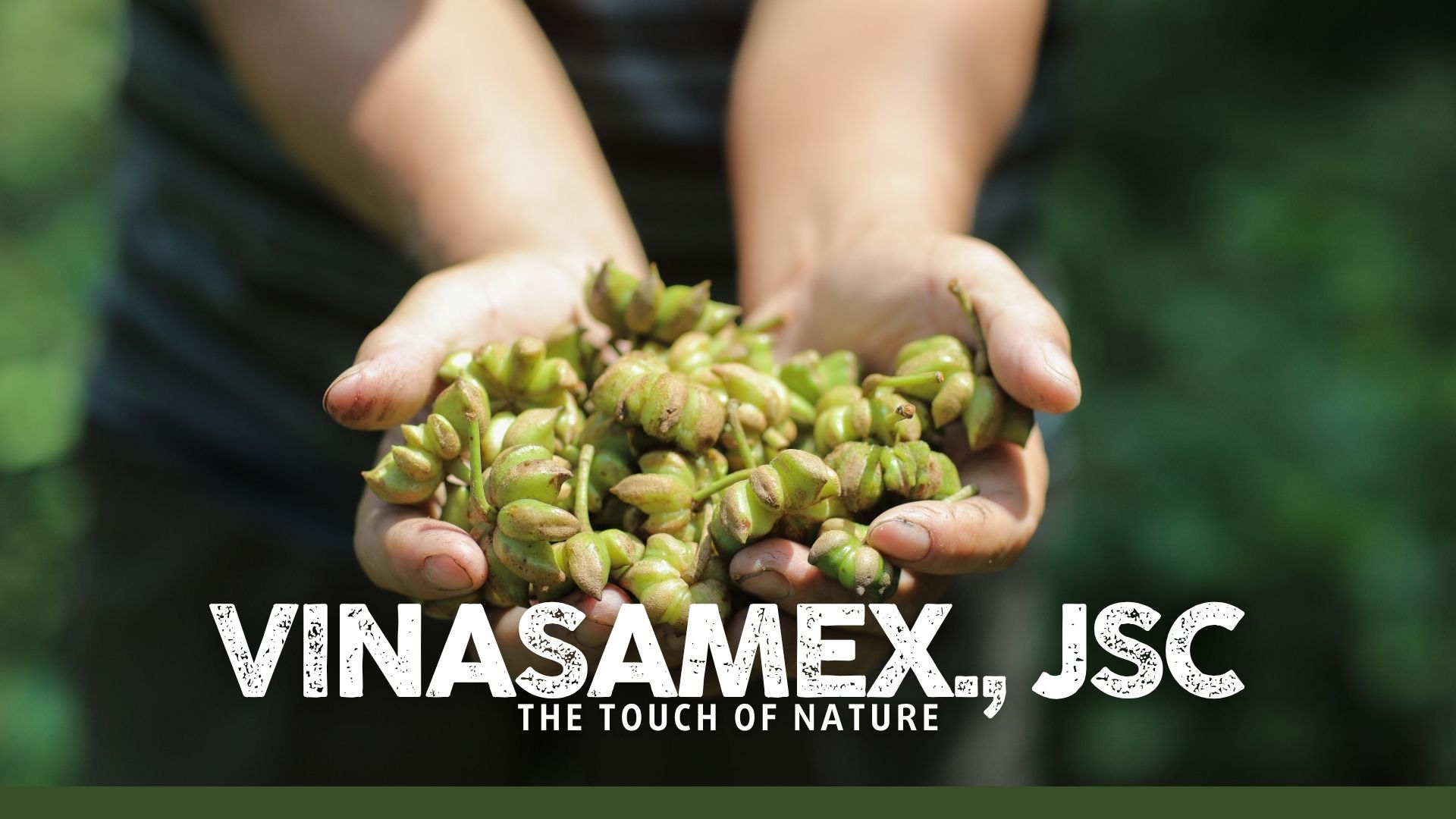
“Freshly harvested star anise drying under the sun in Lạng Sơn province, northern Vietnam — the origin region that consistently delivers trans-anethole content above 85% and among the highest shikimic acid concentrations of any growing area globally.”
Industry One: Flavor & Fragrance — The Trans-Anethole Play
The dominant molecule in star anise essential oil is trans-anethole, a phenylpropanoid compound responsible for the fruit’s signature sweet-licorice aroma. Vietnamese star anise essential oil is world-renowned for its high anethole content, reaching 80–90% of total oil composition.
Lang Son province in northern Vietnam is considered the benchmark origin for quality, with trans-anethole content consistently above 85% and notably free from toxins.
This molecule powers a wide industrial footprint. Anethole is widely used across food, beverage, toothpaste, and mouthwash industries — and in fragrance applications from perfumery to personal care. Liqueurs like absinthe, pastis, and sambuca rely on it entirely for their anisic character.
For flavor and fragrance buyers, the sourcing criteria are relatively straightforward: essential oil yield, trans-anethole purity percentage, GC-MS analysis, and food safety certifications such as ISO 22000 or HACCP.
Industry Two: Pharmaceuticals — The Shikimic Acid Molecule
This is where the story becomes remarkable.
Buried inside star anise fruit — not in its essential oil, but in the fruit tissue itself — sits a small organic acid called shikimic acid. Shikimic acid is the main raw material used to produce the anti-influenza drug oseltamivir, sold under the trade name Tamiflu.
Tamiflu works by targeting the neuraminidase enzyme on the surface of the influenza virus — the enzyme responsible for allowing the virus to spread by cutting its connection to infected cells. Shikimic acid provides the precise molecular scaffold — a cyclohexene ring with specific hydroxyl group arrangements — that makes this synthesis chemically feasible.
Until 2012, Roche Pharmaceuticals used up to 90% of the world’s annual star anise crop to produce Tamiflu via shikimic acid. The dependency was so acute that during the 2005 avian flu panic, star anise prices spiked globally as pharmaceutical companies raced to stockpile supply.
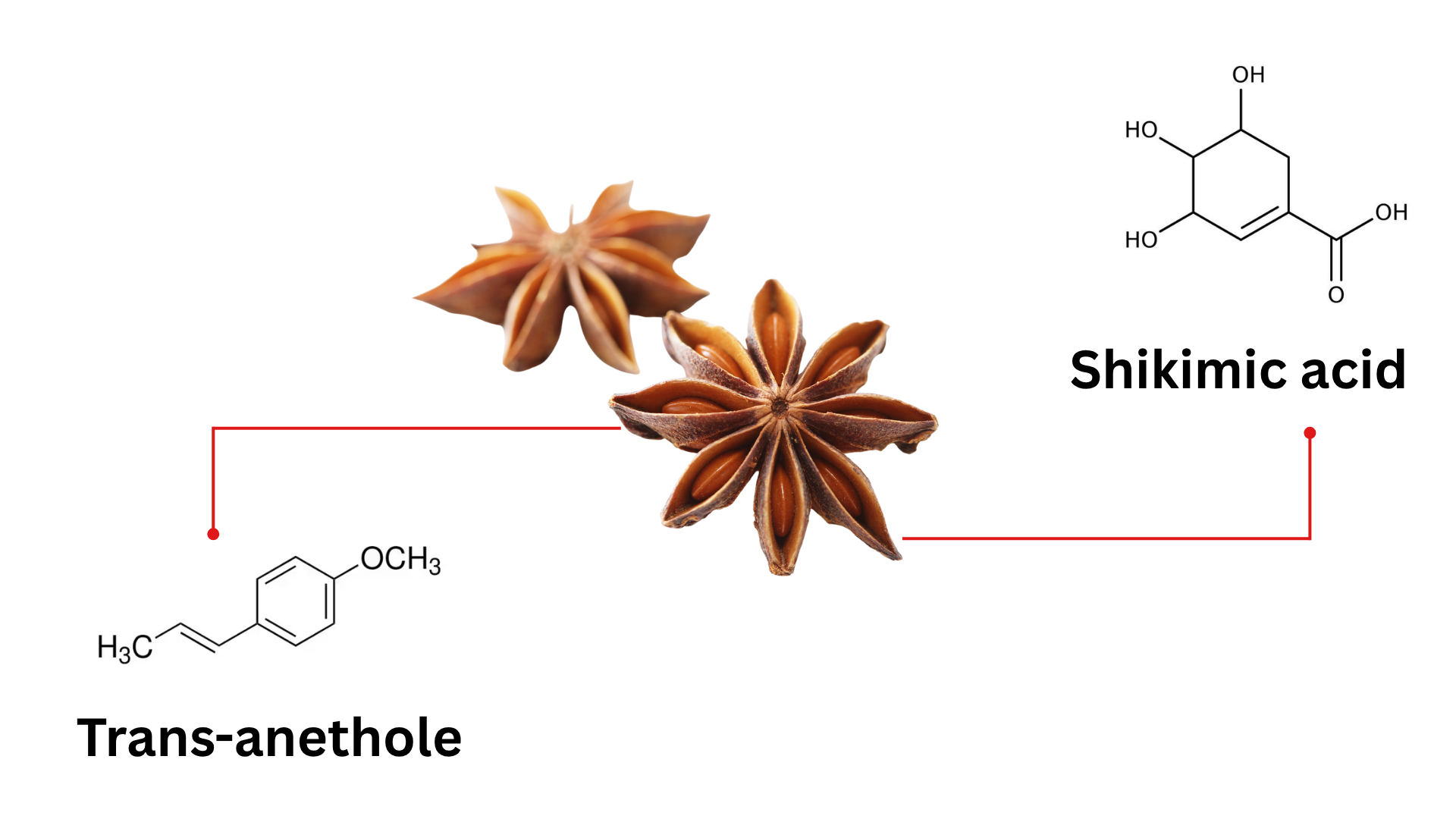
“Two molecules, two industries: trans-anethole (left) drives the flavor and fragrance value of star anise essential oil; shikimic acid (right) is the pharmaceutical precursor that Roche used to synthesize Tamiflu. Both come from the same fruit — but require entirely different extraction processes and buyer documentation.”
Currently, the main source of shikimic acid remains Illicium verum, with production concentrated in four mountainous provinces of China and the Lạng Sơn province of Vietnam. Star anise contains approximately 2–7% shikimic acid — concentrated primarily in the fruit tissue, not the essential oil — making efficient extraction the critical technical challenge.
The Strategic Implication
Star anise is not just a spice. It is a dual-value platform — the same fruit simultaneously feeds a global flavor industry through trans-anethole and anchors a critical pharmaceutical supply chain through shikimic acid.
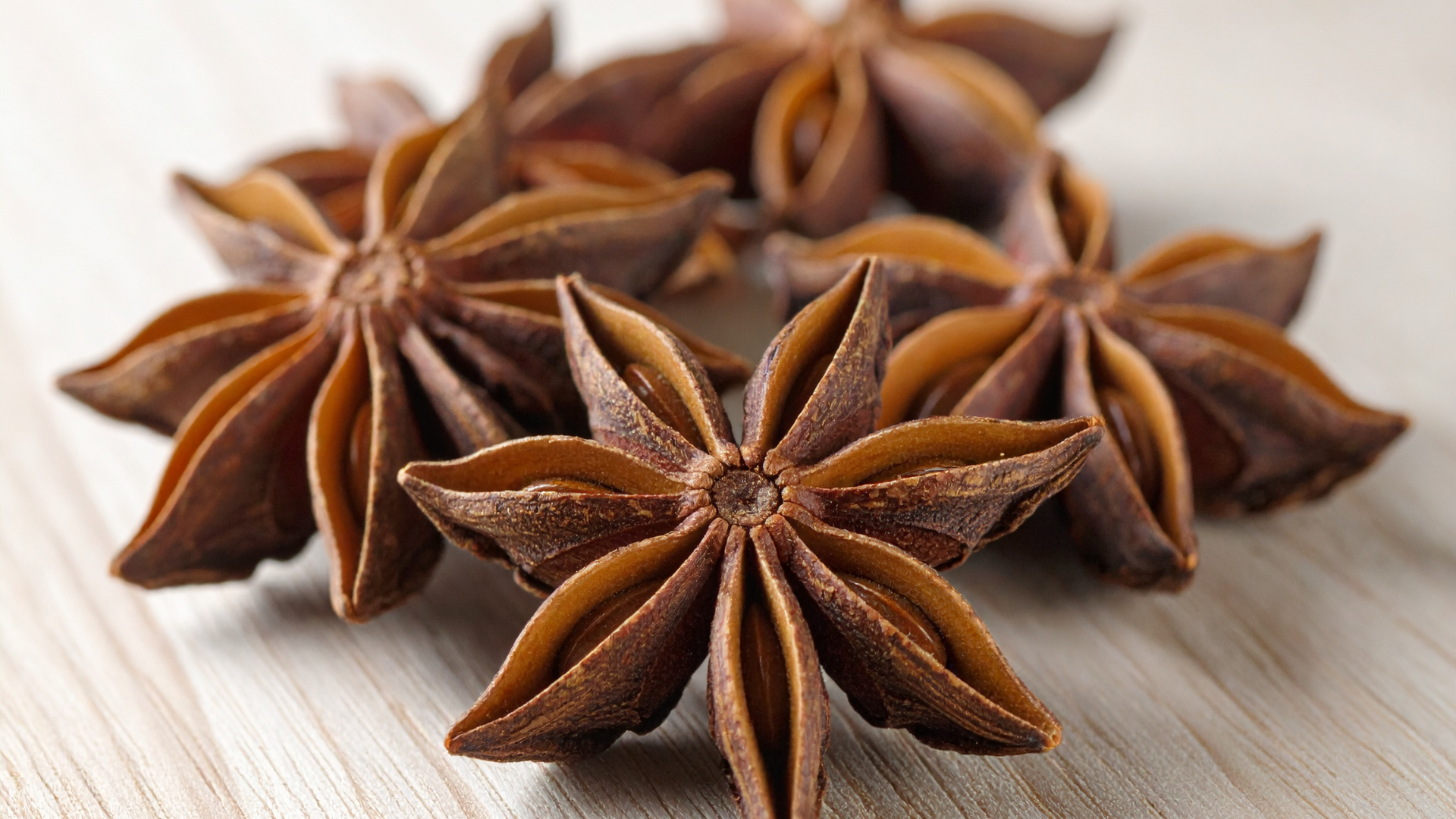
For suppliers with the technical infrastructure to serve both buyer types, this creates a significant competitive position. For buyers sourcing either molecule, the selection criteria for their supplier go well beyond standard agricultural commodities.
Knowing which molecule you are actually buying — and what documentation that molecule demands — is the first question that separates strategic procurement from commodity purchasing.